Jim
The Five Love LanguagesJim is a methodical husband whose marriage to Janice is transformed when he learns to express love in the form she can recognize. After years in which she felt taken for granted and was considering leaving, he begins giving her small gifts and planning gestures of care; the change lasts beyond the week that first taught him what her love language meant. Their story gives concrete shape to the book’s central distinction between intending to love someone and communicating love in a way that person understands.
Identity and Background
Jim grew up on a farm in central Illinois, less than a hundred miles from the farm where Janice grew up. The couple moved to Chicago shortly after their wedding. When the account reaches them, they have been married for fifteen years and have three children. Jim is described as methodical and governed by routine, a temperament Janice experienced as difficult to interrupt or reach.
That routine reflected a family model of domestic roles. Jim remembered that his father worked while his mother managed the household, doing the cooking, washing, and ironing. He had not seen his father vacuum or wash dishes, and he assumed that a wife would take responsibility for the house. The model did not encompass all the work his father actually did: he washed the car and mowed the grass. Jim, however, did not picture himself vacuuming or changing a baby’s diaper. His expectations were inherited rather than negotiated, and they shaped both his division of labor and what he took to be ordinary married life.
Marriage Before the Change
Janice recalled that she had spent years asking Jim for love without feeling that he responded. She cooked, washed, and ironed, and had sex because she understood it mattered to him, but she felt no love coming back. In her view, Jim had stopped dating her after the wedding and taken her for granted. Their material circumstances did not persuade her that the marriage was emotionally sound: he pointed to paid bills, a nice house, a new car, and her freedom to work outside the home or not, while she felt that he did not try to understand her unhappiness.
Her distress had become severe. She loved their children and knew they loved her, but felt nothing from Jim and said that she had come to hate him. She had told him she was seriously considering leaving. The marriage seminar that they attended in Chicago was their first, and Janice arrived expecting little and believing that Jim could not be changed. Although he said he had found the seminar funny, he did not discuss its ideas with her afterward. The weekend itself seemed to have made no immediate difference: Saturday night and Sunday were much as usual.
Learning Janice’s Love Language
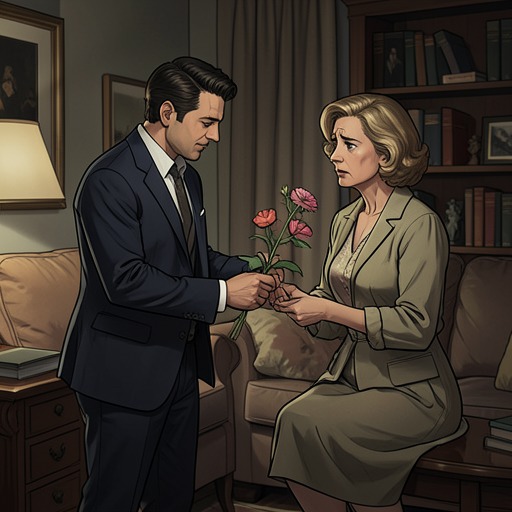
The turn began on Monday afternoon, when Jim came home from work with a rose bought from a street vendor. He said he thought Janice deserved one. She cried and thanked him. She had seen the vendor selling roses that afternoon and knew where it came from, but the source and price were beside the point: Jim had brought her a flower. His gesture broke a pattern in which he had not given her a flower since their wedding.
On Tuesday, Jim called from the office around one-thirty to ask whether he could bring home pizza for dinner, giving Janice a break from cooking. The family enjoyed the meal, the children thanked him, and Janice hugged him and told him she had enjoyed it. On Wednesday he brought each child a box of Cracker Jacks and gave Janice a small potted plant, explaining that the rose would die and the plant would last longer. On Thursday, after dinner, he handed her a card saying that he could not always express his love but hoped the card would communicate how much he cared. Janice cried again and hugged and kissed him. He then suggested that they get a babysitter and go to dinner on Saturday.
On Friday, Jim stopped at a cookie shop and bought each member of the family a favorite cookie, keeping the treats a surprise. The sequence mattered not because the objects were costly, but because they were unlike his established habits. Janice remembered that he had never given her a card for an occasion, had called cards a waste of money, had taken her to dinner only once in five years, and had never brought home pizza or bought the children anything beyond the essentials. The rose, pizza, plant, card, proposed date, and cookies made his attention visible in forms she could receive.
Recognition and Continuing Effort
When Janice asked what was happening, Jim explained that he had listened to the seminar’s lecture on love languages and realized that gifts were her primary language. He recalled that while they were dating he had brought her flowers and other small gifts, but after marriage he decided they could not afford them. He had therefore challenged himself to give her a gift every day for one week and see whether it affected her. By the end of that week, he could see a substantial difference in her attitude.
Jim also recognized the longer failure behind the experiment. He apologized for having been slow to understand Janice’s need for love and said that he appreciated what she did for him and the children. He promised, with God’s help, to keep giving gifts. When Janice objected that daily purchases would be unaffordable, he proposed at least one gift a week—fifty-two more in a year than she had received in the previous five years—and pointed out that gifts did not all have to be bought: he might make them or pick a free flower from the front yard in spring.
Janice later reported that Jim had not missed a single week in three years. She called him a new man and said their children now called them lovebirds; her emotional love tank was, in her words, full and overflowing. The account’s measure of the change is thus both immediate and sustained: the week of daily gifts altered the emotional climate, and a weekly practice carried that change forward for years.
Mutual Love Languages and Significance
The story does not present the change as a discovery that Janice had never loved Jim. Asked whether he felt loved by her, Jim said he always had. He named her housekeeping, cooking, care for his clothes, and work for the children as evidence. Those services had already communicated love to him because acts of service were his own primary love language. Janice’s efforts had been real, but they did not answer her need in the form she most readily understood; his recognition of that mismatch allowed him to distinguish his experience of being loved from hers.
Jim’s change also required him to question what marriage and household work were supposed to look like. The book connects his earlier assumptions to the roles he saw modeled by his parents, while noting that he was willing to move beyond the stereotype once he understood its effect on Janice. Elsewhere, the account describes a similar reckoning when a husband realizes that the household arrangement he inherited does not meet his wife’s needs. The point is not that one particular division of labor fits every marriage, but that inherited expectations can obscure what a spouse is asking for, and that changing them may itself be an act of care.
Jim’s example illustrates the book’s larger argument that sincerity alone is not enough when spouses speak different emotional languages. He had once brought Janice flowers while they were dating, then stopped after marriage; a seminar helped him recognize both the lost practice and what it meant to her. By choosing to speak her language, he helped restore a marriage Janice had nearly abandoned, while her continuing acts of service remained the way she expressed love to him. Their renewed closeness rests not on a single dramatic gift, but on learning to recognize and sustain the different forms through which each spouse gives and receives love.